
Zero Gravity Massage Chair: Why This Position Makes Relaxation Feel Different


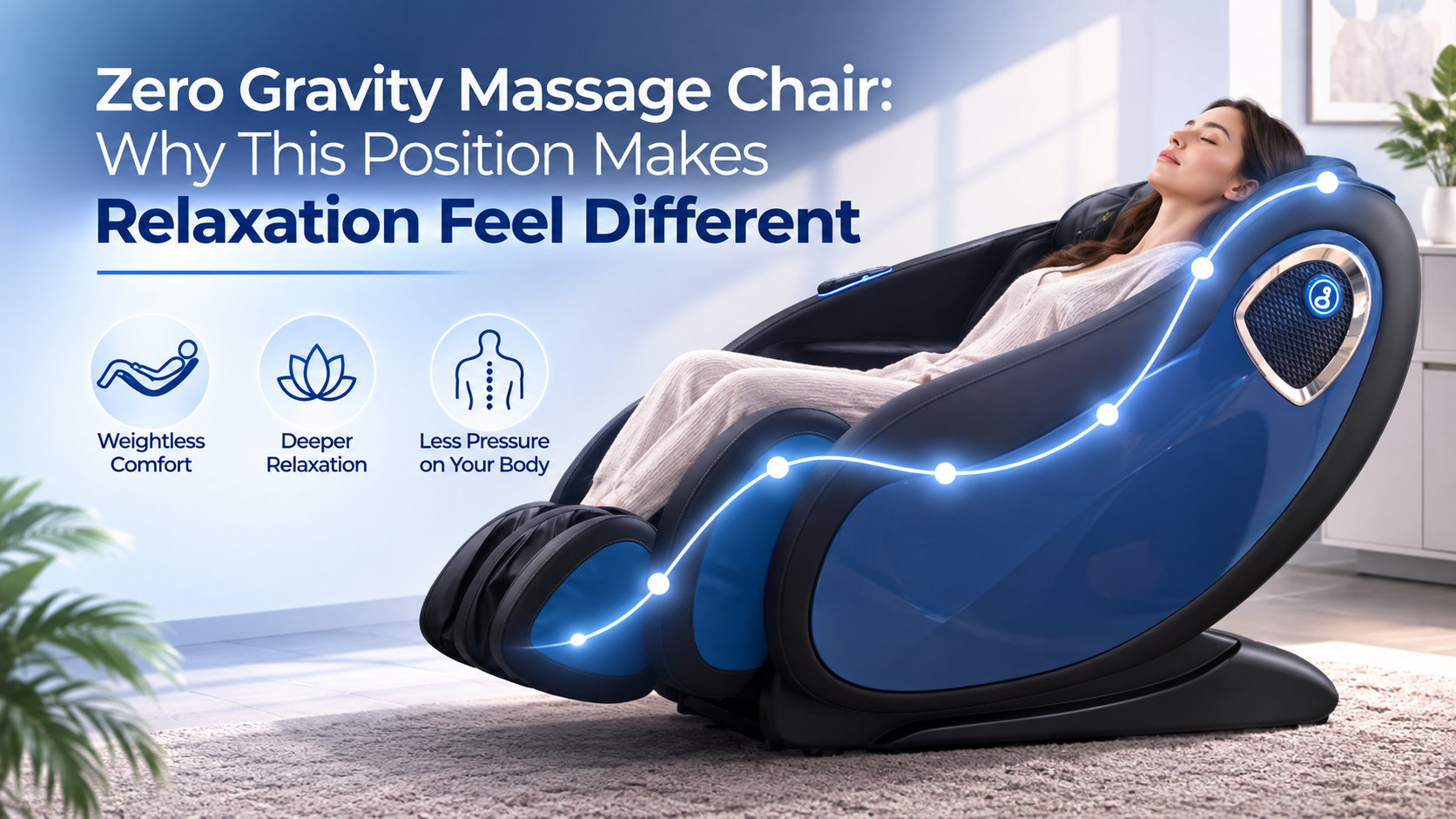
Zero Gravity Massage Chair: Why This Position Makes Relaxation Feel Different
Have you ever noticed how much easier it is to relax when your body is properly supported?
That simple idea is behind the zero gravity massage chair. By reclining the body into a supported position, these chairs are designed to create a more weightless-feeling experience while combining reclining technology with automated massage.
What makes this interesting is that the chair isn't simply moving your body backward. Its position is designed to distribute your weight differently, creating a comfortable foundation for the massage functions to work.
For people looking for a more immersive relaxation experience, understanding how this position works can make it easier to appreciate what modern massage-chair technology can offer.
What Is a Zero Gravity Massage Chair?
A zero gravity massage chair is designed to recline the user into a position inspired by the posture used in zero-gravity seating.
Rather than remaining completely upright, the chair raises and supports different parts of the body as it reclines.
The result is a position that can feel noticeably different from sitting in an ordinary chair.
When combined with automated massage functions, this position can create a more comprehensive relaxation experience.
Some advanced models may combine zero-gravity positioning with:
- Robotic massage mechanisms
- Air compression
- Foot massage
- Heat functions
- Multiple massage programs
- Adjustable intensity
- Reclining controls
Gagake's commercial G-01 Full-Body Pod Massage Station, for example, includes a zero-gravity function alongside robotic massage, airbags, multiple programs, and foot and calf massage capabilities.
Why Does the Reclining Position Matter?
Imagine trying to relax while sitting upright after walking around a shopping centre for two hours.
Your back is against the chair, your legs are positioned downward, and your body is still supporting much of its own weight.
Now imagine reclining with your legs elevated and your body supported by the chair.
The experience can feel completely different.
This is one reason a reclining massage chair can be appealing. The reclining position can create a more comfortable setup before the massage even begins.
Instead of simply sitting in a chair that massages you, you are placed into a position designed around relaxation.
Zero Gravity Massage Chair Benefits Beyond Comfort
The appeal of zero-gravity positioning isn't just about how futuristic it looks.
There are several practical zero gravity massage chair benefits that can make the experience more enjoyable.
A More Relaxed Body Position
Reclining can make the body feel more supported than an upright seated position.
A More Immersive Massage
When the body is reclined, massage functions can work while the user remains in a position designed for relaxation.
Better Use of Downtime
A short session can become a more intentional break from travelling, shopping, working, or exercising.
A Premium Experience
Zero-gravity positioning can make a commercial massage station feel more sophisticated than a basic massage seat.
The experience becomes part of the appeal.
What Makes a Robotic Massage Chair Different?
Traditional massage requires a person to manually work different areas of the body.
A robotic massage chair uses mechanical systems to reproduce programmed massage movements.
Depending on the model, these systems may target different areas and offer different massage patterns or programs.
Modern chairs can also combine robotic mechanisms with other technologies.
This is where things become particularly interesting.
Instead of relying on one feature, advanced chairs can combine multiple systems to create a more complete experience.
For commercial environments, this can be especially useful because users with different preferences can select different programs rather than receiving exactly the same experience every time.
The Role of Air Compression
Another technology commonly found in advanced massage chairs is air compression.
An air compression massage chair uses airbags that inflate and deflate around selected areas of the body.
Depending on the chair, compression may be applied around areas such as the arms, shoulders, calves, or feet.
This creates a different sensation from robotic rollers.
The combination of robotic massage and air compression can make the experience feel more comprehensive.
Gagake's G-01, for example, incorporates six sets of airbags alongside robotic massage technology and zero-gravity positioning.
Don't Forget the Feet
After a long day, the feet can be one of the first areas to feel tired.
That is why a massage chair with foot massage can be particularly appealing in public spaces.
Consider someone who has spent hours:
- Walking through a shopping centre
- Standing at work
- Exploring a new city
- Travelling through an airport
- Attending a conference
- Exercising at a gym
A chair that provides only back massage may offer relaxation, but incorporating the feet and lower legs can create a more complete experience.
For commercial operators, this also expands the chair's appeal to customers who may be looking for more than a simple back massage.
Why Are These Chairs Appearing in Public Places?
The traditional image of a massage chair is something sitting in someone's home.
That is changing.
Self-service massage stations are increasingly being introduced into places where people already spend time, including airports, shopping centres, hotels, gyms, and offices. Gagake says its self-service stations are designed for these types of high-traffic environments.
The reason is simple.
People don't always have time to visit a spa.
But they may have 15 minutes while waiting for a flight.
They may take a break during a shopping trip.
They may want to relax after checking into a hotel.
They may have a few minutes before a meeting.
The chair brings the relaxation experience closer to where the customer already is.
Is Zero Gravity Just a Trend?
The technology may look futuristic, but the underlying idea is fairly straightforward: create a supported reclining position and combine it with automated massage.
What makes the concept more relevant today is how easily it can be integrated with other technologies.
Modern commercial massage stations can incorporate digital payment systems, connectivity, automated operation, and remote management in addition to massage functions. Gagake describes its iSPA system as combining hardware and cloud technology for its business partners.
So the evolution isn't only happening inside the chair.
It is happening around the entire experience.
A Better Way to Think About Massage Chairs
A massage chair doesn't have to be viewed simply as a machine that provides massage.
It can be a technology-driven relaxation experience.
The position matters.
The massage mechanism matters.
The compression system matters.
The foot massage matters.
And, in commercial settings, the payment and management technology matters too.
When these elements work together, a few minutes in a chair can feel surprisingly different from simply taking a seat.
Bringing Advanced Relaxation to Canada
Gagake iSPA Express is bringing automated massage experiences into Canadian commercial environments through self-service stations designed for convenience and accessibility. The company says its stations are already used across Canada and are intended to give busy people a quick opportunity to relax and recharge.
For businesses, this creates another way to add a wellness experience without building a traditional spa.
For customers, it creates something even simpler:
A place to stop.
Sit down.
Recline.
And take a few minutes for yourself.


Frequently Asked Questions
It refers to a reclining position designed to support the body while creating a more weightless-feeling seating posture.
Yes. Some commercial models combine zero-gravity positioning with robotic massage, air compression, and other advanced features.
Some models include dedicated foot and calf massage functions, although features vary between models.
They can be used in homes and, depending on the model, commercial locations such as hotels, airports, malls, gyms, and offices.